
Do Dental Offices Use AI to Answer Calls?
A growing number of dental offices use AI to answer at least some of their calls. Here's what that actually looks like on a call, and where a person still steps in.
September 13, 2026

Yes. A growing number of dental offices now use AI to answer at least some of their calls, though usually not in the all-or-nothing way that sounds. Most practices running this today use it to catch the calls a front desk physically cannot get to (after hours, during a busy check-in, when every line is already tied up), not to replace a receptionist outright. What that AI actually does on the call, and how much a person still shows up in the process, is the part worth understanding before you assume either "it's just a fancy voicemail" or "a robot is running the front desk."
What actually happens when the phone rings?
An AI receptionist answers the call directly instead of routing it to voicemail or an automated button menu. It uses information the practice has already provided (services offered, appointment types, office hours, common patient questions) to understand what the caller needs, and it can act on that understanding: checking real calendar availability, booking or rescheduling an appointment, or answering a routine question, during the call itself. The difference from a missed call or a voicemail is that nothing has to wait for someone to listen to a message and call back later; the request can be resolved on the spot.
Is this the same as the old phone-tree menu?
Not really. A phone tree ("press 1 for billing, press 2 for scheduling") just routes a caller to a department; a person still has to pick up on the other end. An AI receptionist works closer to an actual conversation: the caller says what they need in their own words, and the system responds to that specific request instead of sorting the call into a bucket. It's also different from the automated "missed call, we'll call you back" text some offices already send. That's a follow-up after the call was missed, not something answering the call in the moment.
Does a real person still get involved?
This is the design choice that matters most, and the honest answer is: it depends on how the system is built. A version worth using lets staff review what the AI handled, correct it, or take a call over live and move it from the AI to a person, and some calls shouldn't stay with automation at all: a distressed patient, an unusual request, anything outside routine scheduling. One office manager put the real worry plainly: "My team is already stretched. Anything new has to make their day easier, not harder." A well-built AI receptionist is meant to absorb the repetitive part of the call volume, the overflow and after-hours coverage a front desk can't physically staff, not hand the team a new system to babysit on top of their existing workload.
What about texting or booking online instead of calling?
Often the same setup covers both. Many practices running an AI receptionist also send an automatic text when a call is missed, so the caller isn't left wondering if anyone got the message, and offer online booking as a second way in, so calling isn't the only option. Different angles, same problem: a caller who can't get through by phone, or doesn't want to, still needs a way to reach the practice.
Why would a dental office set this up in the first place?
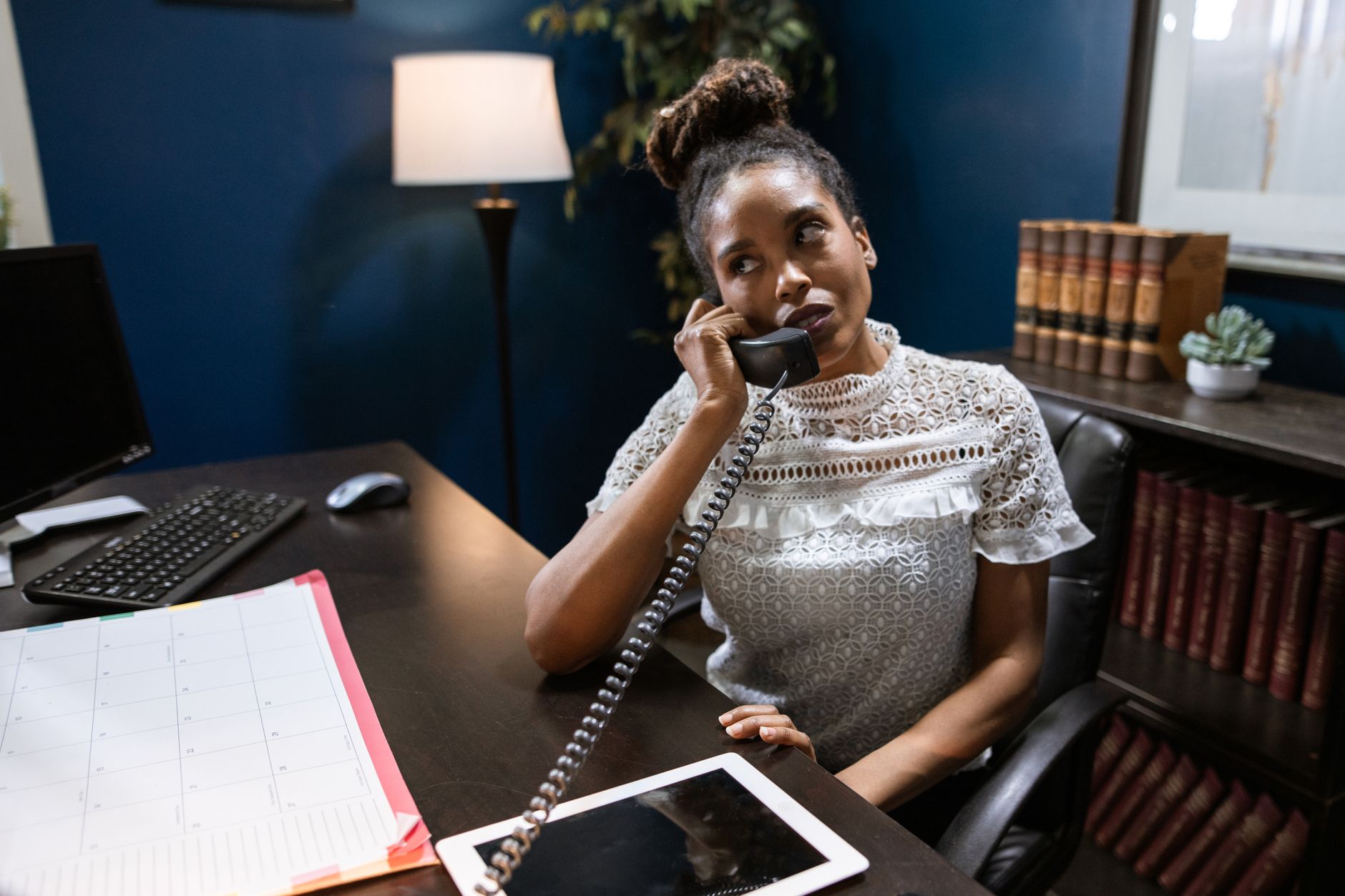
Usually not to cut staff. It's to stop losing the calls that happen when the front desk is already at capacity. One front-desk coordinator described the pattern from the other side of the phone: "I can't be on the phone and checking in a patient at the same time, but somehow it's still my fault when we miss a call." That's a scheduling-capacity problem, not a personal one, and it's the specific gap an AI receptionist closes: covering the calls that come in while a real person is already occupied, instead of adding a second full-time line for someone to staff.
How can you tell if you're talking to AI?
That depends on the practice; there's no single answer across the industry. What's confirmed for MTS's own AI Receptionist specifically: staff can review any conversation the AI handled, edit its responses, or step in and take over a call live, and certain conversations get routed straight to a person instead of the AI in the first place, an approach MTS describes as "selling automation, not autonomy." If how a system discloses itself matters to you, ask any AI receptionist vendor directly rather than assuming either way.
So is this worth paying attention to?
If your practice's calls mostly get answered promptly by a person already, probably not urgently. If calls are piling up outside business hours, during lunch, or whenever the front desk is double-booked with a walk-in and a ringing phone at the same time, an AI receptionist is built for exactly that gap, not as a wholesale replacement for the people your patients already know.
Related reading: if you're past "is this a real thing" and into comparing it against a traditional live-operator answering service, AI Dental Receptionist vs. Human Answering Service walks through coverage, cost structure, and compliance side by side.
Related articles

AI Dental Receptionist vs. Human Answering Service: How to Actually Choose
AI dental receptionist vs. human answering service: how coverage, cost, compliance, and scheduling integration actually compare, and how to choose.

Why Your Front Desk Keeps Getting Blamed for Missed Calls
Missed calls at a dental office are usually a coverage problem, not a front-desk failure. Here's why it happens and the four-step fix that actually works.

Missed Call Text-Back for Dental Offices, Explained
A missed call at your dental office is a patient your front desk never got the chance to help. Here's what missed call text-back does and why it matters.